
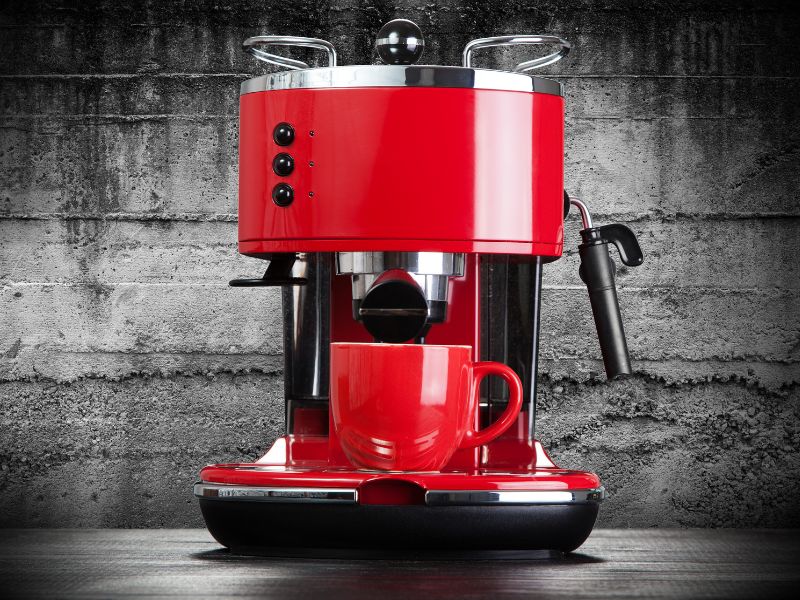
What follows is an opinion rather than a neutral survey of the market, because somewhere in the last decade a handful of appliance brands worked out that if you make a vacuum cleaner look like a design object then people will happily pay four times more for it, and they were absolutely right. Buying a hoover used to be about cleaning floors, and now it’s something you leave out rather than put away, something you feel a small flicker of pride about when a visitor clocks it in the hallway. The same has happened to coffee machines and air fryers and fans and most of what sits on a kitchen worktop, and none of it happened by accident.
Why the logo works on us, and why falling for it isn’t stupidity
Going along with this doesn’t make anybody a mug, because the psychology behind it is quite reasonable once you look at it properly.
Buying decisions are exhausting, and comparing twelve air fryers on specifications you don’t fully understand at nine o’clock at night is not something most people have energy for. A strong brand cuts through that in half a second by saying, don’t worry about any of this, other people like you bought this one and they were perfectly happy. That’s an enormously valuable service and we pay for it willingly without quite noticing we’re doing it.
Then there’s the visibility problem, which I suspect matters more. Appliances live in the parts of the house people actually see, and whether we like it or not that stuff says something about us. Brands have become very good indeed at making sure what it says is flattering, which means buying the premium one isn’t really about suction or bar pressure, it’s about being the sort of household that has one. I don’t think wanting that is shameful, because we’re social creatures and we’ve always done this in one form or another. The problem is simply that it’s become very expensive.
Where cost of living comes into it
Households have spent four years absorbing increases in more or less every direction at once, and most people have already done the obvious cutting. The subscriptions got cancelled, the supermarket got swapped, the thermostat went down a degree, which means whatever savings are left have to come from somewhere less obvious.
So here are four categories where the gap between price and performance has grown wide enough to be worth doing something about. I’ve tried to be fair to the premium options, because several are genuinely excellent and an argument that pretends otherwise isn’t worth reading, and I’ve been honest about what you give up with each cheaper one, because there’s always something.
1. Heating and cooling fans
The premium option: Dyson Hot + Cool, roughly £400 to £600
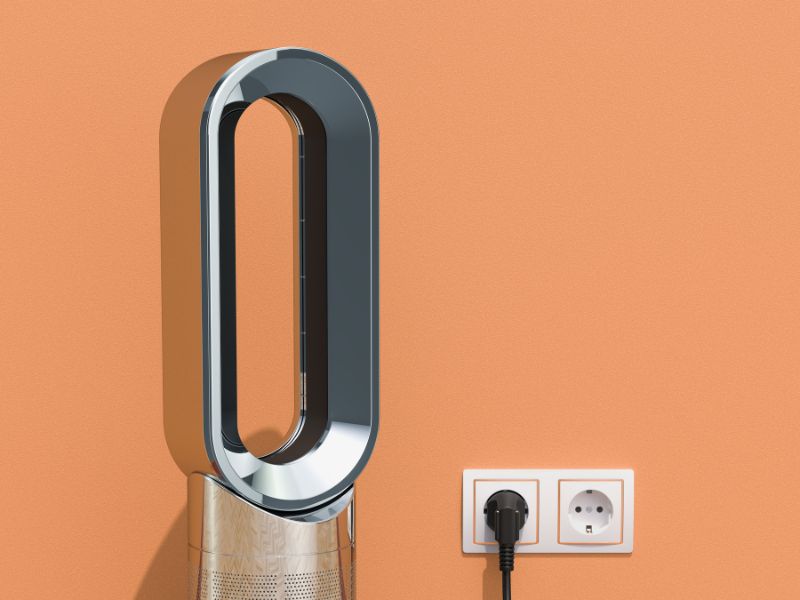
Credit where it’s due, Dyson essentially invented this category, because before they arrived a fan was a plastic cage with blades spinning behind it and nobody thought twice about it. You get bladeless airflow through summer and heating through winter in one unit, excellent build quality, oscillation wide enough to cover a room, and proper HEPA filtration on the purifier models. The design is, honestly, very good, and I won’t pretend otherwise just because it suits my argument.
The question is whether the bladeless engineering is really worth £400 to £600, or whether that figure mostly reflects fifteen years of being the default answer to a question people don’t have time to research properly.
The affordable alternative: Vortex Air Pro Plus, £139.99
Vortex Air is a UK brand making bladeless heating and cooling fans at about a third of that price. It’s worth exploring the Vortex air cooling fans collection before you commit to anything more expensive.
It’s fully bladeless, which is the thing people are paying premium money for in the first place, so there’s no cage and nothing exposed anywhere on it. That means it’s safe around children and pets and, in more day to day terms, you clean it by wiping it. Anybody who has unscrewed the front of a fan in August to get at two summers of trapped grey fuzz will understand immediately why that matters.
The ten speed settings sound minor until you’ve lived with a fan offering three, because the setting you actually want is permanently somewhere between option two and option three. Ten gives you proper control, particularly at the quiet end where you’re trying to sleep rather than cool a room. It heats as well as cools with a built in thermostat, so it holds the room at a temperature rather than blasting away until you remember it’s on, and the timer runs to nine hours so it’ll cover a whole night. Wide angle oscillation spreads airflow across the room instead of pointing it relentlessly at one person on one side of the sofa.
The airflow itself is smooth and continuous, which nobody thinks about until they’ve experienced both. A bladed fan chops the airstream every time a blade passes, and from across the room you’d never notice, but sitting beside it at one in the morning you notice every single pulse. There’s also a range of colours and a clean understated finish, which counts for more than you’d expect when the thing lives in your living room all year, plus a two year warranty, UK support and free next day delivery.
The honest trade off is that the standard Pro Plus doesn’t filter the air, so if somebody in your house has serious allergies and that was your main reason for looking at a Dyson, it’s a fair point to weigh. Vortex do a purifying version, still well under the equivalent premium model.
All in, you’d save around £300 to £450 for a machine doing the same two jobs.
2. Coffee machines
The premium option: Ninja Luxe Café, around £478 to £550
The Luxe Café is the flagship of Ninja’s remarkable few years, a proper three in one handling espresso, filter and cold brew, with a built in burr grinder running twenty five settings, integrated scales and an assisted tamper so your tamping is consistent rather than dependent on how awake you are.
It is, without question, a lot of machine, and that’s rather the point. The question worth sitting with is whether you need a lot of machine, or whether what you need is a decent flat white before work, because those are very different requirements and only one costs five hundred pounds to satisfy.
The affordable alternative: Swan Retro Pump Espresso, around £85 to £110
Swan is a British brand going since the 1930s, and their Retro range has quietly become one of the best selling coffee machines in the country, which tells you how many people reached this conclusion independently. You can buy it from Swan directly.
The headline figure is fifteen bar pressure, the number determining whether you get a proper espresso or something closer to sad brown water. It takes both ground coffee and ESE pods, so you’re not locked into buying from anyone in particular, and there’s a traditional stainless steel frothing arm with steam pressure control, meaning you froth the milk yourself rather than pressing a button and hoping. Plenty of people prefer it that way. Add a 1.2 litre detachable tank and genuinely lovely retro styling in a range of colours.
What you give up is the grinder, so you’re either buying ground coffee or spending thirty pounds on a separate one, which a lot of coffee people would tell you to do anyway since a standalone at that price often beats a built in one. Even with that added, you’re under £150 and roughly £400 better off.
3. Vacuum cleaners
The premium option: Dyson cordless, around £300 to £750
I’ll be fair here too, because cordless Dysons genuinely changed how people clean. No cable to fight with, light enough to carry upstairs without thinking about it, and the wand detaches so stairs and car interiors stop being a twenty minute ordeal involving an extension lead.
The catch, and it’s a real one, is the battery, because battery life degrades over the years, replacements are expensive, and the suction drops as the charge drains, which means on a proper big clean you’re racing it. For plenty of households that’s an acceptable trade. For others it’s the thing that eventually turns a happy purchase into a regret.
The affordable alternative: Henry, around £130 to £150
Henry has been built in Somerset by Numatic since 1981, and the reason you see one in every school and office and building site in Britain isn’t that professional cleaners have a collective sense of humour, it’s that the things are extraordinarily difficult to kill.
The nine litre capacity is roughly ten times what a cordless bin holds, so you’re emptying it a few times a year rather than a few times per clean, and the ten metre cable means you do an entire floor without replugging. Crucially, the suction stays consistent all the way through, because there’s no battery draining behind it.
Then there’s the economics, which is where it gets properly persuasive. A replacement motor costs around thirty pounds against several hundred for a digital motor unit, bags and parts are available absolutely everywhere, and used Henries regularly sell for around sixty percent of retail, which is an almost unheard of resale value for a household appliance.
The trade off is obvious. It has a cable, you drag it around behind you, and on stairs it’s more faff. Plenty of people solve that by owning a Henry for the real cleaning and a cheap handheld for quick jobs, and even buying both they’re between £170 and £600 better off.
4. Air fryers
The premium option: Ninja Foodi Dual Zone, around £180 to £230
Ninja turns up twice in this article, which rather neatly demonstrates the whole argument, in that brand momentum built in one category spills straight into the next and we go along with it without examining why.
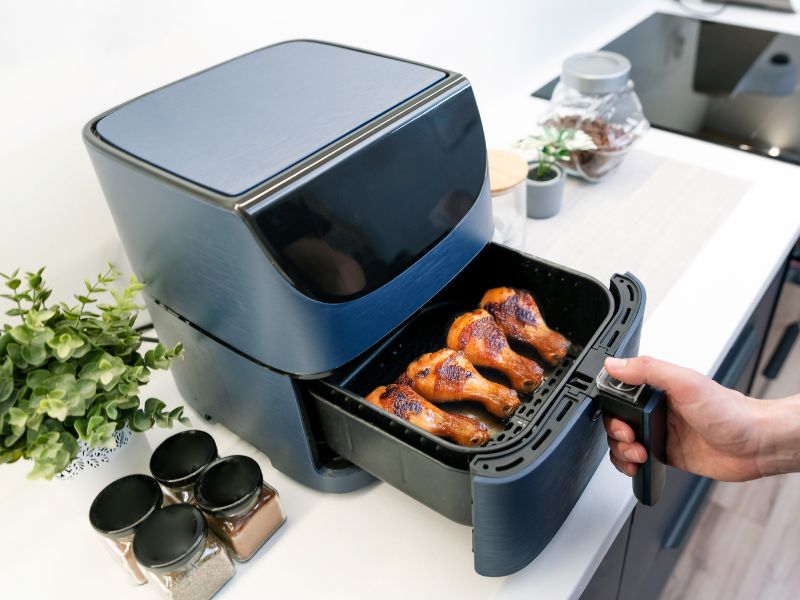
In fairness, the Dual Zone is the machine that turned air fryers into a national obsession, and the two drawer design solves a genuine problem, which is cooking two things that need different times and temperatures without standing there doing mental arithmetic.
The affordable alternative: Salter dual drawer air fryer, around £80 to £100
Salter has been a British name since 1760, a faintly absurd length of time to have been making kitchen equipment, and their dual drawer models do the same core job for less than half the price. Their range is at salter.com.
You get two independent drawers with separate controls, a synchronised finish function so everything lands together, multiple preset programmes, comparable capacity and dishwasher safe drawers, which matters more than you’d imagine after a few batches of chips.
The honest trade off is build quality, and it is a definite step down. The drawers feel lighter and I’d be mildly surprised if it lasted as long. But at less than half the price you could replace it entirely once and still be ahead, which puts the saving at £100 to £150 and arguably rather more.
Price and performance stopped being the same conversation
Across those four categories, choosing the alternative saves somewhere between £950 and £1,650. That’s a holiday, or several months of energy bills, or a meaningfully less tense conversation at the end of the month.
The assumption underneath all of this is that price tracks performance, and I’d suggest that stopped holding up around the point manufacturing got good enough that the hard problems were solved. Think about what’s actually inside these products. A fan moves air with a motor and an impeller, technology understood for the best part of a century. An espresso machine pushes hot water through coffee at fifteen bar, and fifteen bar is fifteen bar whoever built the pump. An air fryer is a small fan oven, and a vacuum creates suction. None of these are frontier engineering problems, and the components solving them are largely bought in from the same handful of suppliers regardless of whose name ends up on the casing.
So if the engineering has converged, what is the extra three or four hundred pounds buying? Mostly better materials where you touch them, industrial design, a marketing budget large enough that you’d heard of the brand before you started looking, and a margin reflecting what that brand has established it can charge.
What’s striking is how often the cheaper option doesn’t merely cope but actually wins. A Henry keeps its suction through an entire clean while the machine costing four times as much is fading by the back bedroom. That isn’t a budget product nobly punching above its weight, that’s a budget product being better at the job.
Which brings me to the thing I’d like people to take away. Value isn’t price and it isn’t cheapness either. Value is what something does, divided by what it costs across the years you own it, and once you think in those terms a lot of purchases look different. A £140 fan that also heats your living room through winter is doing twice the work of a £450 one that sits in the loft from September. A £150 vacuum you can fix for thirty quid is worth more over a decade than a £600 one you replace when the battery dies. The sums only favour the expensive option if you refuse to count the years.
I’m not suggesting anybody stops buying nice things. Some premium products genuinely earn their price, and if an object brings you a small pleasure every morning that’s a legitimate reason to spend more. What’s worth retiring is the reflex, the assumption that the expensive one must be better and that whatever appears first when you search is the only serious option. Because in most of these categories the premium isn’t buying better engineering, it’s buying the reassurance of having chosen the obvious thing, so that if it goes wrong nobody can accuse you of carelessness. Reassurance has real value. I just don’t think it’s worth four hundred quid.
And if you find yourself hovering over the expensive one, maybe just ask yourself this. If you peeled the logo off the front of both machines, put them side by side on your worktop, and judged them purely on what they did for you over the next five years, would you still be able to tell which one you were supposed to want?