
Long, narrow gardens can feel like a design challenge, often appearing constrained or tunnel-like. However, with thoughtful planning, these spaces can become inviting sanctuaries filled with depth, function, and beauty. Inspired by Sarah Worswick’s personal garden journey and expert insights, these ideas focus on creating zones, adding sensory elements, and maximising space while keeping costs low. Whether you’re working with a slim urban plot or a sprawling rural strip, these strategies will help you craft a garden that feels wider, more dynamic, and perfectly tailored to your lifestyle.
Divide into Garden ‘Rooms’
Break the linear feel of a long garden by creating distinct zones or ‘rooms’ to add intrigue and purpose. Use hedges, pergolas, or trellises to separate areas for dining, relaxing, or growing edibles. For example, a terrace near the house can serve as a breakfast nook, while a patio further down becomes an entertaining space. This approach, as Sarah Worswick implemented, obscures the garden’s end, making it feel larger and more immersive.
Tip: Use reclaimed timber or pallets to build affordable arches or screens to define zones.
Introduce a Water Feature
A water feature, like a pond or trickling fountain, adds a calming focal point and masks neighbouring noise, ideal for terraced homes. Sarah’s existing pond, revitalised with marsh marigolds and lilies, became a wildlife haven and sensory highlight. In smaller spaces, a compact bowl fountain or solar-powered bubbler achieves a similar effect without requiring major installation.
Tip: Repurpose an old barrel or crate as a mini pond for a budget-friendly water feature, ensuring a fine mesh protects wildlife from pumps.
Create a Winding Path
A meandering path, as opposed to a straight one, visually widens a narrow garden and invites exploration. Sarah’s flagstone-and-pebble path adds a relaxed, cottage-style charm while guiding visitors through different zones. Use materials like gravel or reclaimed stone to keep the look natural and maintenance low.
Tip: Source second-hand flagstones from salvage sites or local suppliers to cut costs.
Plant Deep, Vibrant Borders
Deep borders filled with lush planting, like foxgloves or hardy geraniums, create a cottage-garden aesthetic that distracts from a garden’s narrowness. Plant in layers—tall perennials like delphiniums at the back, mid-height salvias in the middle, and low-growing lavender at the front. This approach, recommended by Amanda Patton, adds depth and softens boundaries.
Tip: Grow annuals like cosmos from seed for affordable, colourful fillers.
Use Bamboo for Screening
Bamboo, as Sarah used in oak barrels, provides privacy and movement while dividing zones. Opt for non-invasive, clumping varieties like Phyllostachys nigra to avoid root spread. Potted bamboo is ideal for flexibility and wind resistance, creating a natural screen between areas like a pond and patio.
Tip: Buy young bamboo plants and repot into second-hand barrels or crates to save money.
Add a Patio for Entertaining
A patio, like Sarah’s flagstone design, creates a functional ‘room’ for gatherings. Position it midway or at the garden’s end to break up the space. Incorporate large planters with drought-tolerant plants like lavender or agapanthus to add colour without overwhelming the area. Railway sleepers or reclaimed bricks can define the edges affordably.
Tip: Check local suppliers like B&M Concrete for discounted flagstones or sleepers.
Incorporate a Garden Studio
A garden studio, as Sarah’s Suffolk Barn illustrates, adds a purposeful zone for work or relaxation. Position it three-quarters down the garden for a sense of separation, enhancing the feeling of a commute or retreat. Clad in timber or Corten steel, it can double as a sculptural focal point.
Tip: Opt for a second-hand shed or DIY a studio using reclaimed materials to keep costs low.
Build a Vegetable Patch
A veggie patch, tucked behind a studio or near a shed, adds function and charm. Sarah’s enclosed patch grows rhubarb and seasonal crops, shielded by lavender to deter pests. Raised beds made from reclaimed wood keep the space tidy and accessible, even in narrow plots.
Tip: Use old crates or pallets for raised beds and plant rosemary for natural pest control.
Disguise Boundaries with Planting
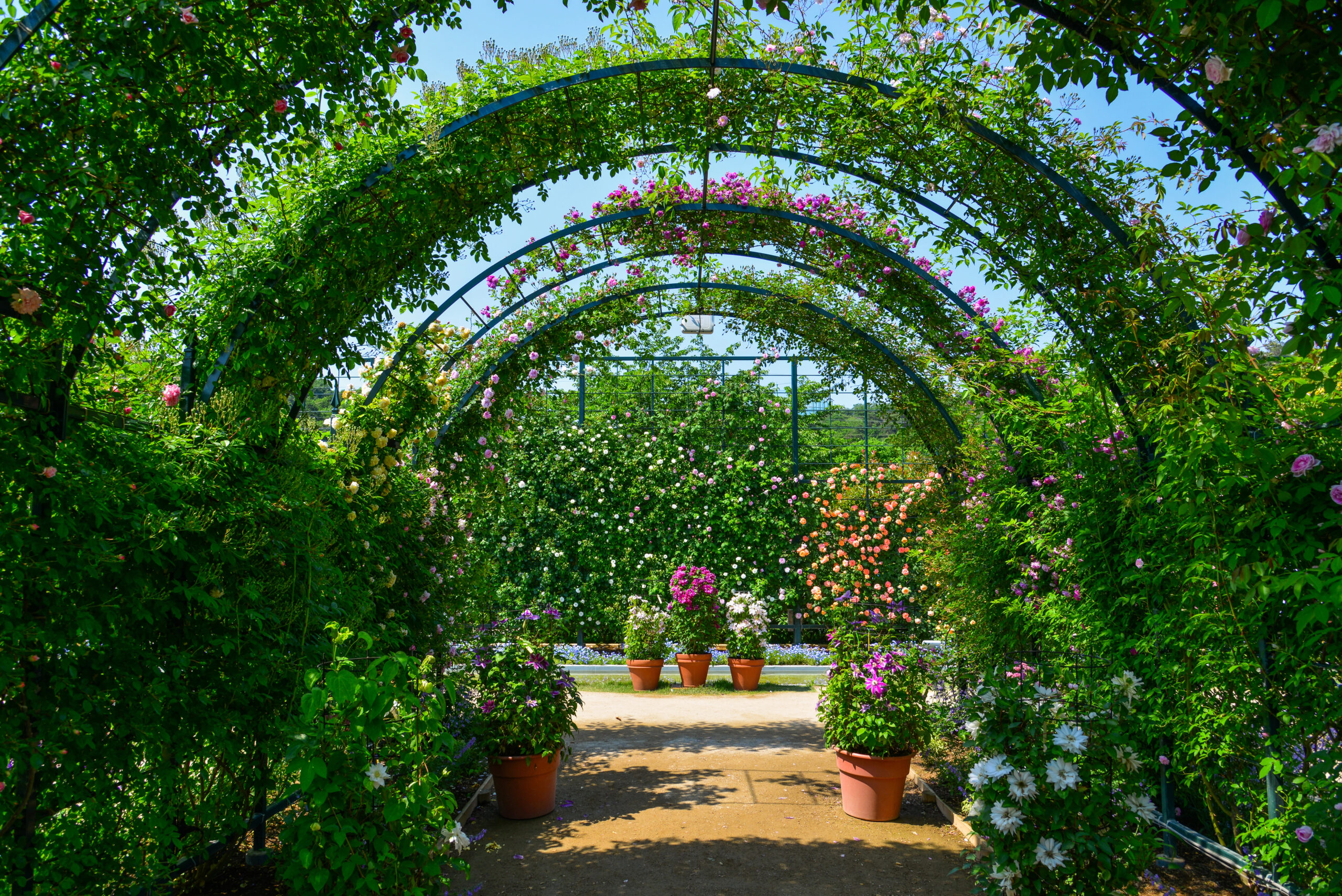
Conceal fences or walls with climbers like clematis or Virginia creeper to soften the space and reduce claustrophobia, as Sam Proctor suggests. Tall shrubs or multi-stemmed trees like Amelanchier lamarckii add height and privacy without blocking light. This creates a lush, immersive feel.
Tip: Propagate climbers from cuttings shared by gardening friends to save on plant costs.
Widen with Mirrors or Reflective Features
Mirrors, like Cox & Cox’s trellis-style designs, reflect greenery to make a narrow garden feel wider. Place them on fences or walls, surrounded by soft planting, to create the illusion of extra space. Add bird-friendly decals to prevent collisions. Alternatively, a reflective sculpture, as David Harber recommends, adds light and intrigue.
Tip: Source second-hand mirrors from charity shops and paint frames to match your garden’s palette.
Budget-Friendly Long Garden Tips
- Repurpose Materials: Use reclaimed bricks, sleepers, or pallets for paths, beds, or pergolas.
- Grow from Seed: Sow cosmos or nasturtiums for quick, cheap border fillers.
- Plant Swaps: Exchange cuttings of climbers or perennials with local gardeners.
- Solar Lighting: Use solar-powered LEDs to highlight paths or features without wiring costs.
- Shop Salvage: Check Freecycle or local skips (with permission) for flagstones or timber.
Design Inspirations
- Sensory Retreat: Combine a trickling water feature, scented lavender, and tactile grasses for a calming zone.
- Cottage Charm: Deep borders with foxgloves and a winding gravel path evoke a relaxed, English vibe.
- Modern Elegance: A sleek patio with bamboo screening and a reflective mirror creates a contemporary oasis.
These long garden ideas transform narrow spaces into functional, beautiful sanctuaries. By zoning, adding sensory elements, and using budget-conscious materials, you can craft a plot that feels expansive, inviting, and uniquely yours.