
What began as seeking shelter from the elements has now turned into shaping our surroundings as an extension of who we are and how we want to live our lives. So much more than physical containers, our spaces now reflect our values and aspirations.
Throughout history, interior spaces and architectural forms have evolved along with cultural shifts, technological advances, and social structures. When we learn about how humans have historically moulded their environments, that’s when we can truly understand the emotional and symbolic weight of our homes.
Hop on a journey with us through time and explore how we’ve continuously shaped our spaces to reveal our identity, culture, and personal meaning.
The Origins: Shelter & Survival
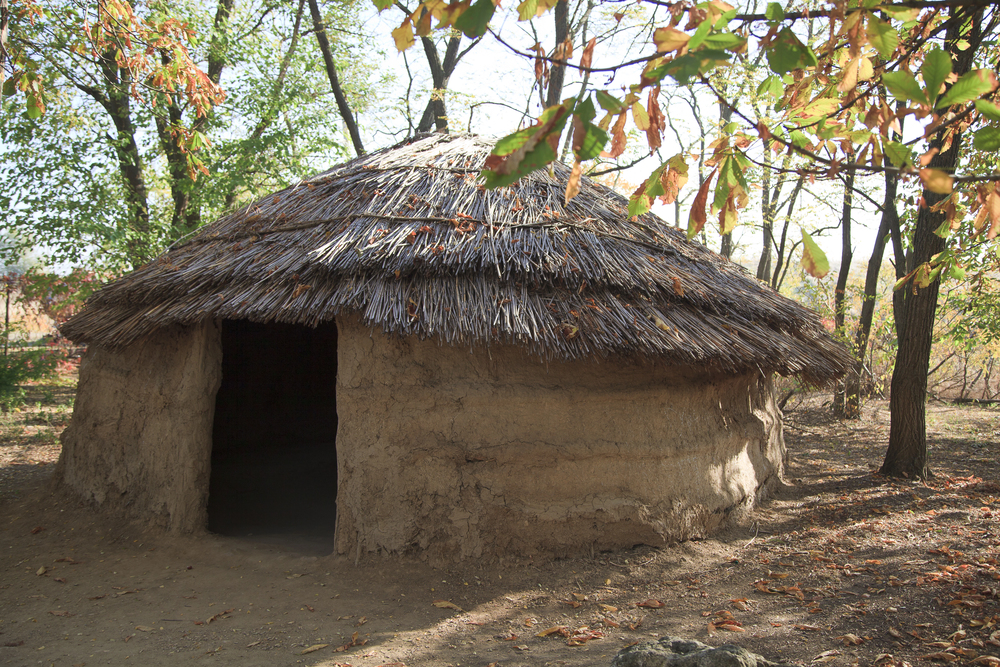
Before aesthetics, velvet cushions and dimmed lights, there was survival. The earliest humans lived in caves, huts, and tents—all simple responses to harsh climates, predatory threats, and the need for communal safety.
But even in these primitive forms of home environment, spatial decisions were still deliberate. Sleeping areas were separated from cooking fires, and entrances faced away from prevailing winds. As humans moved from Nomadic living to settled communities, we slowly established fixed homes that hinted at a deeper sense of place and belonging.
The beginning of our relationship with our homes was a dialogue between body, shelter, and land.
Power, Status, and Spirituality in Antiquity
With the rise of civilisation, and survival no longer being an issue, architecture became a language of status and beliefs. Monumental structures emerged in Egypt and Mesopotamia as places of worship, divine order, and political authority, communicating also permanence, control, and connection to the cosmos.
In domestic terms, homes were organised around courtyards and atriums that served both practical and ceremonial purposes. The layout of rooms would reflect social rank, gender roles, and family structure, with private quarters positioned deeper within the home, away from the public view.
Stone, symmetry, and sacred geometry were used to symbolise harmony between human life and the larger forces at play. Space was no longer about survival; it now conveyed meaning.
A Medieval Story of Fortresses and Faith
The Middle Ages were a time of flux defined by invasions, feudal hierarchy, and deep religious conviction. Castles and fortified manors were built to withstand siege as much as to house nobility. Thick stone walls, narrow windows, drawbridges and moats shape the domestic experience of the times. Survival had basically come back around as the primary function of the home.
Yet, even in such austere settings, symbolic design persisted with tapestries depicting lineage and legend, hearths anchoring communal life and great halls reinforcing authority. But not only. Religious ideals of order and devotion also seeped from every corner of these spaces.
In the Middle Ages, the act of shaping space became intertwined with finding shelter and nurturing belief.
The Renaissance Rise of Aesthetic Intention
The human need for expression and beauty found its outlets with the arrival of the Renaissance. Architecture and interior design became deliberate acts of self-reflection, driven by humanist values and interests in science, art, and the individual.
People began designing spaces for intellectual and aesthetic pleasure. Salons for discussions, libraries for learning, and galleries for contemplation became part of everyday life and people’s needs. Private homes began to reflect the personalities and aspirations of their dwellers.
It was the birth of intentional curation.
Innovation Meets the Home
The Industrial Revolution completely redefined the way people lived, worked, and, naturally, how they inhabited space. Mass production made materials, once reserved for the wealthy, accessible to a burgeoning middle class. Homes grew in number and density, and expanded urban centres.
The Victorian interior also reflected this shift with its richly decorated and densely furnished homes, now full of new inventions. The parlour emerged as a stage for respectability, lined with ornate furniture, lace curtains, and family heirlooms.
The home was now a repository of status, sentiment, and consumer goods.
The Machine Age of Self-Expression
The 20th century marked a profound shift in how we shape and inhabit our spaces. Modernism pushed design towards clarity, efficiency, and purpose. Visionaries like Mies van der Rohe and Walter Gropius were influenced by mass production and championed the idea of “less is more”. Homes were now streamlined, open-planned environments full of light and honest materials like steel, concrete and glass.
Interiors prioritised flow and logic, favouring built-in furniture and universal aesthetics. Design was now about better living for all.
But as the century progressed, so did our desire for individuality. Postmodernism emerged in reaction to modernism’s rigid minimalism, embracing eclecticism, history, and playful contradiction. Colour, gilded mirrors, patterned textiles, and expressive forms returned, turning homes into places that tell stories.
And soon, interior design matured into a profession that curated spaces to reflect personality, memory, and mood. Collected objects and prints for walls offered ways to personalise your space. Abstract or photographic, typographic, and illustrative art became a modern language of self-expression.
Today’s interiors continue to echo this dialogue between structure and soul: functional yet flexible, refined yet richly personal.
A Never-Ending Dialogue Between Humans and Space
Across millennia, the spaces we shape have always reflected the complexity of our human life. They protect us, empower us, express who we are, and evolve just like we do.
And as we look ahead, the future of space-making will demand more empathy and adaptability than ever before. Our homes and cities must become more inclusive, emotionally intelligent, attuned to human needs and environmental imperatives alike.
In the end, shaping a space means shaping the way we live, and the story continues with every room we design.