
The bumper is one of the most visible parts of any car, yet it is also one of the most misunderstood. Often viewed merely as a decorative element or a surface that takes minor scrapes, the bumper is in fact a crucial feature in both the visual and functional design of a vehicle. It combines safety, engineering, and style in one seamless structure.
Bumper – more than It seems
To the casual observer, a bumper may just seem like an exterior panel made of plastic or metal. But it is far more than that. It plays a vital role in absorbing impacts, protecting internal components, and preserving the integrity of a vehicle during low-speed collisions. In modern vehicles, bumpers are designed to integrate seamlessly into the car’s aerodynamics and aesthetics, while also housing sensors, lights, and other technologies.
As AUTODOC notes:
“We all want our cars to look good, so it’s important to keep them clean and shiny. A well-kept vehicle shows that you take pride in it and care about how it looks. Whether you’re driving to work, running errands or going on a trip, a clean car makes the experience more enjoyable and leaves a good impression on others.”
The bumper, then, is not just about protection — it’s also about presentation.
Evolution – from a piece of metal to an engineering masterpiece
The earliest bumpers were simple metal bars bolted to the front and rear of cars. Their main job was to absorb minor impacts, and they did little to enhance the vehicle’s appearance. Over time, however, automakers began to recognize the value of bumpers not just as shields, but as design elements.
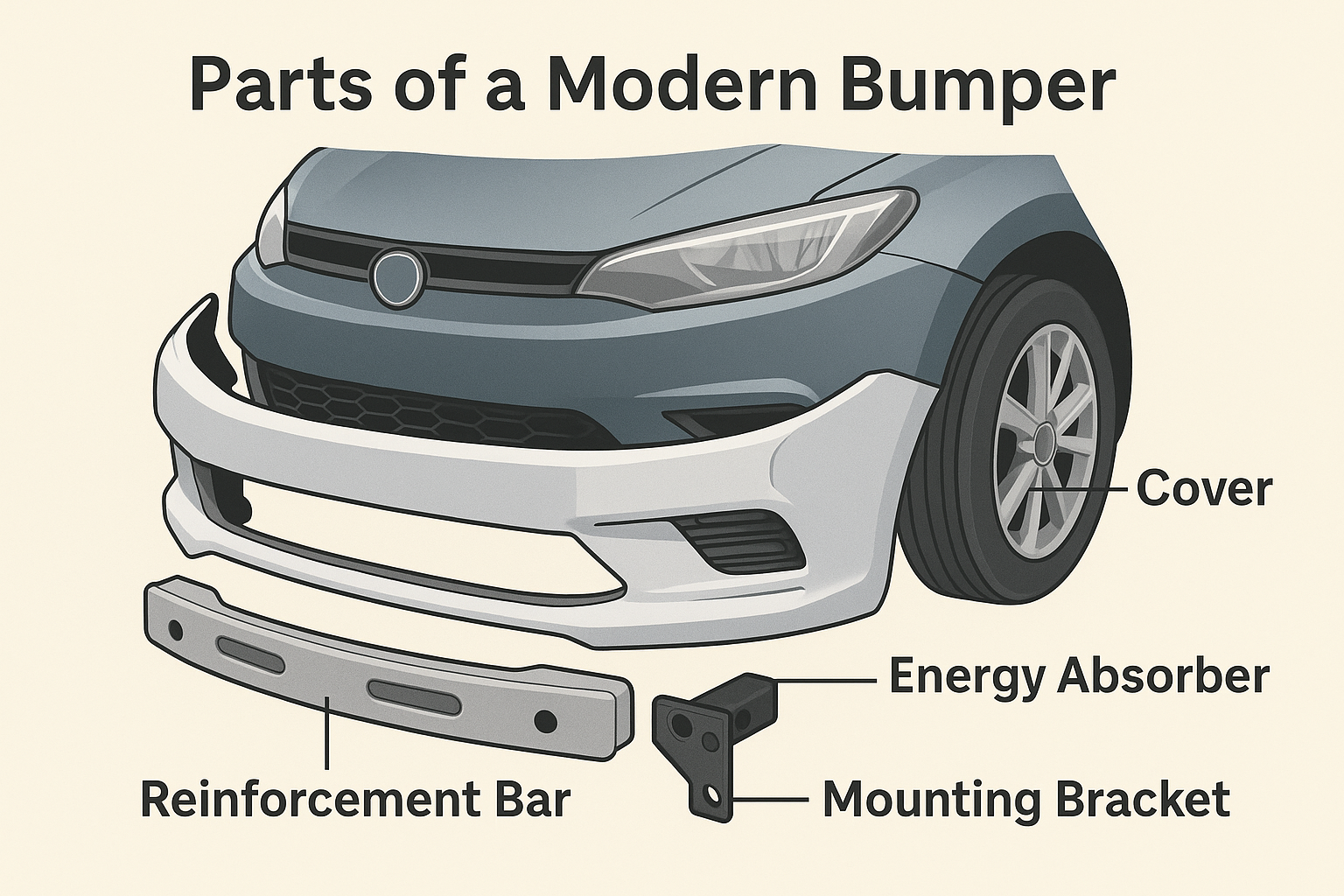
Today’s bumpers are multi-layered structures composed of energy-absorbing foam, impact bars, and a stylish outer cover. This layered construction helps to reduce injury risk to pedestrians, minimize vehicle damage, and increase insurance safety ratings.
In the case of compact cars, the bumper is the central element of the premium image of the car. Having examined the front bumper on the BUYCARPARTS website, we found that its elegant design combines elegance and engineering precision. Not only is it painted in different colors and has a special shape that matches the profile of the car, but it is also equipped with fog lights, parking sensors and air ducts.
Safety in practice how a bumper saves in real situations
The bumper is often the first point of contact in an accident, and that’s by design. In low-speed collisions — for example, in parking lots or city traffic — the bumper is responsible for absorbing the brunt of the impact, helping to:
- Protect pedestrians by minimizing sharp edges
- Prevent costly damage to headlights, grilles, and engine components
- Activate safety systems like airbags or crash sensors
Even at higher speeds, while a bumper alone can’t prevent all damage, its crumple zones and energy-absorbing materials play a significant role in reducing impact severity.
Modern bumpers may also work in conjunction with driver-assistance systems, such as automatic emergency braking, lane departure alerts, and proximity sensors — all of which rely on technology that’s often mounted within or near the bumper itself.
Design a bumper as part of a car’s image
Beyond safety, bumpers have become integral to a vehicle’s overall aesthetic. In fact, car manufacturers use bumper design to differentiate models and reinforce brand identity. A sporty bumper with sharp lines can suggest speed and agility, while a more understated bumper might convey luxury and refinement.
Front bumper contributes to the car’s aggressive stance and modern look. It balances the styling cues from the grille and headlights while flowing into the side skirts and lower valances.
Practicality and technology a bumper in the 21st century
The 21st-century bumper is a hub for innovation. Aside from housing design features, many bumpers now incorporate:
- Reinforced energy-absorbing zones
- Plastic blends that are both flexible and resilient
- Mounting brackets for radar and cameras
- Textured finishes that resist minor abrasions
- Paint and coating technologies that resist fading and UV damage
This means that modern bumpers are more than passive barriers; they’re dynamic contributors to a safer and more high-tech driving experience. And with manufacturers pushing the limits of autonomous driving, future bumpers may include even more integrated tech — like LIDAR sensors or predictive collision modules.
In every way, the bumper reflects the idea of form with meaning. It’s not just a design flourish or a regulatory requirement — it’s a critical fusion of style, structure, and safety. Whether navigating tight city streets or cruising on the highway, your bumper is working silently to protect you and enhance your car’s presence.
For car owners, maintaining a high-quality bumper is essential. Whether you’re replacing a damaged one or upgrading for aesthetic appeal, choose parts that honor the original craftsmanship. A well-maintained bumper protects not only your car — but also your investment, your image, and, most importantly, your safety.
Source of information: autoprotoway.com